If you have a high-drive dog, you already know: They are intense. They never stop moving, thinking, reacting. Their energy feels endless, and no matter how much you run them, they still bounce off the walls. You’ve tried longer walks, faster runs, playing fetch until your arm goes numb—only to have them stare at you, eyes wide, waiting for more.
The world tells you the answer is simple: exercise them more.
But I’m here to tell you—that’s wrong.
The Truth About Calming a High-Drive Dog
Most people assume a high-drive dog just needs to be tired out physically. But what if I told you that you could run your dog for hours and still not solve the problem? Because high-drive isn’t just physical—it’s mental.
In fact, some of the most amped-up, anxious, and relentless dogs I’ve ever seen were the ones that were over-exercised and under-stimulated mentally.
If you want to calm your high-drive dog, you have to stop treating their body like the problem and start focusing on their mind.
Overstimulation vs. Healthy Energy
Not all energy is good energy. A dog that is overly worked up—panting excessively, eyes dilated, pacing, hyper-focused on movement—is not actually in a healthy drive state. They’re overstimulated. Over-aroused. Trapped in an adrenaline loop.
Dogs like this can’t settle, even when they’re tired. They don’t know how to turn off. And that’s because we, as their handlers, have never shown them how.
A truly balanced, high-drive dog should be able to go from full intensity to complete relaxation on command. That’s the goal. Not exhaustion, but control.
The Missing Piece: Mental Stimulation
Mental work does something physical exercise never will: It teaches the dog how to problem-solve, self-regulate, and relax. Here’s how you can start shifting your focus from endless physical exhaustion to something much more powerful:
1. Make Them Work for Their Food
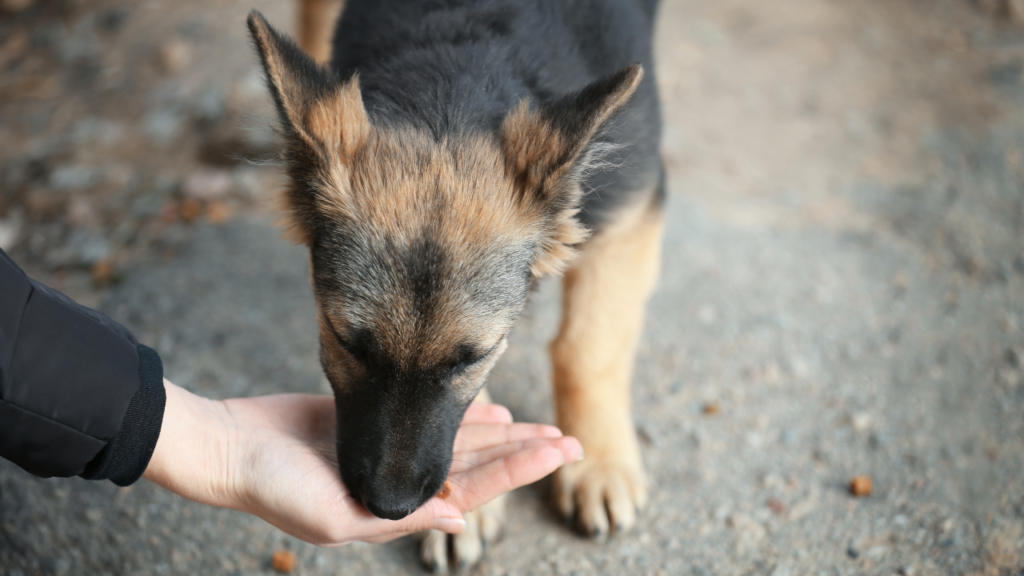
Forget the free food bowl. If your high-drive dog eats without thinking, you’re wasting the easiest training opportunity of your day. Use food puzzles, scatter feeding, hand-feeding, or obedience drills before every meal.
2. Give Their Brain a Job
Training should be a daily routine—not a “when I have time” activity. High-drive dogs crave direction, and without it, they create their own jobs (chewing furniture, chasing shadows, barking non-stop). Structured obedience, scent work, or advanced tricks engage their brain in a way that drains energy far more efficiently than a run.
3. Master the Art of Impulse Control
Impulse control is the difference between a dog who jumps at every stimulation and a dog who learns to pause and think first. Teach your dog to hold a place command while distractions happen around them. Reward patience. If they struggle with self-control, that’s a sign you need more work here.
4. Build a Reliable “Off Switch”
Can your dog stop mid-action and settle on command? If not, you don’t just have a high-drive dog—you have an unbalanced high-drive dog. Calmness is a trained skill. Teach them that when you say “enough” or “place”, it’s time to shut off.
5. Balance Movement With Stillness
The healthiest, most stable working dogs in the world have mastered both high intensity and calm composure. Work your dog hard—but then expect them to relax. If they struggle, guide them. Teach them that stillness is part of the job, too.
Challenge Yourself: Are You Really Helping Your Dog?
It’s easy to fall into the trap of thinking that just because we’re meeting a dog’s exercise needs, we’re doing everything right. But if your high-drive dog still struggles to settle, you’re missing a piece of the puzzle.
Your dog’s full potential isn’t just about drive. It’s about balance. About control. About learning how to channel that incredible energy into something productive, and then—when the work is done—letting it all go.
That’s the real challenge. That’s where the real growth happens.
Your Turn: What’s Your Dog’s Favorite Mental Game?
Every high-drive dog is different, and I want to hear from you! What’s your go-to mental exercise that helps your dog settle? Drop it in the comments and let’s learn from each other!
📩 Have questions? Contact us here!
📖 Want to learn more? Check out our blog on How to Stop Your Dog From Destroying Things