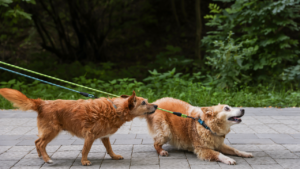
Leash pulling isn’t just annoying—it’s revealing. Every time your dog drags you down the street, ignores your pace, or locks onto a distraction, they’re making a decision: “I’ll take it from here.” That forward momentum without permission isn’t excitement alone—it’s a quiet power grab. And most owners unknowingly reinforce it by following along.
If you’ve ever wondered why your dog only listens when it’s convenient, or why walks feel more like a battle than a break, you’re not alone. The issue isn’t a lack of effort or even a lack of tools. It’s clarity. Specifically, clarity about who sets direction, controls movement, and decides what happens next.
In this blog, we’ll reframe leash pulling for what it really is—a leadership issue—and show you how to become the one your dog chooses to follow, consistently and confidently.
If you’re already feeling stuck with your dog ignoring you or pulling nonstop, you’re not alone—and you don’t have to figure it out by yourself. You can reach out for help here: https://bethebossdogtraining.com/contact-us/
How to Stop Your Dog From Embarrassing You in Public
Let’s be honest—nothing makes a dog owner feel more out of control than being embarrassed in public by their own dog. One minute you’re heading out for a simple walk, and the next you’re getting dragged down the sidewalk, apologizing to strangers while your dog jumps all over them, completely ignoring everything you’re saying. It’s frustrating, it’s exhausting, and if we’re being real… it’s a little humiliating too.
Most people assume this is just a training issue. They think their dog needs more commands, more treats, or maybe a different tool. But here’s the truth most aren’t told:
If your dog ignores you in public, it’s not a training gap—it’s a leadership gap.
Public environments amplify whatever dynamic already exists between you and your dog. At home, where distractions are low, your dog might listen just fine. But the moment you step outside—where there are smells, people, other dogs, and constant stimulation—your dog starts making their own decisions. Why? Because they’ve learned they can.
Getting dragged on walks isn’t just about excitement. It’s your dog deciding the direction and pace. Jumping on people isn’t just friendliness. It’s your dog claiming access without checking in. Ignoring you entirely? That’s your dog prioritizing everything else over you.
This isn’t about being harsh or “dominating” your dog. It’s about becoming clear, consistent, and worth following in moments that actually matter. Dogs naturally follow leaders who control movement, set boundaries, and create structure. When that’s missing, they step into that role themselves—especially in stimulating environments.
The good news? This is fixable—and often faster than people think. When you shift from trying to “manage behaviors” to establishing leadership, everything starts to change. Your dog begins to check in. They wait for direction. They move with you instead of against you.
And suddenly, those stressful, embarrassing walks? They become calm, controlled, and even enjoyable.
Because at the end of the day, it’s not about having a “perfect” dog in public—it’s about having a dog who sees you as the one to follow, no matter where you are.
If this sounds familiar—getting dragged, ignored, or embarrassed in public—it’s a sign that your dog doesn’t fully see you as the decision-maker yet. And if you want help fixing that in real life, not just in theory, you can start here: https://bethebossdogtraining.com/contact-us/
How to Make Walks Easy Instead of Exhausting
Let’s call it what it is—if your walks feel like a workout you didn’t sign up for, something’s off. You clip the leash on, take a deep breath, and already feel that तनाव before even stepping out the door. Within seconds, your dog is pulling, your arm is tightening, and the whole “relaxing walk” idea disappears. Instead of enjoying the time together, you’re managing chaos.
Most owners assume this is normal. “My dog just has a lot of energy.” “They’ll grow out of it.” Or worse—they just accept that walks will always be exhausting. But here’s the truth:
When your dog follows your lead, walks stop feeling like work.
The problem isn’t the walk itself—it’s who’s in charge of it. If your dog is setting the pace, choosing the direction, and pulling you from one thing to the next, you’re not walking your dog… you’re being walked. That constant tension on the leash? That’s not just physical strain—it’s a lack of clarity in leadership.
No more arm strain starts with one simple shift: your dog learns that forward movement only happens when you allow it. When pulling no longer gets them where they want to go, and walking calmly beside you does, everything begins to change. The leash loosens, your body relaxes, and the walk becomes smoother almost immediately.
That pre-walk तनाव fades too. When your dog understands structure—waiting calmly at the door, not bursting out, tuning into you before the walk even begins—you stop bracing yourself for a battle. You start expecting cooperation instead of conflict.
And that calm, controlled pace? That’s the result of consistency. Dogs don’t guess what to do—they repeat what works. When you consistently lead the walk, set the tempo, and follow through, your dog naturally starts matching your energy instead of fighting against it.
This isn’t about slowing your dog down—it’s about bringing them with you. A walk should feel like a shared activity, not a tug-of-war.
Once your dog sees you as the one setting direction and pace, everything shifts. The leash becomes loose, your confidence grows, and those walks you used to dread? They become something you actually look forward to.
If you’re tired of dreading walks before they even start, you’re not alone. There’s an entire community of dog owners working through the same challenges and sharing real progress here: https://www.facebook.com/groups/dogsunleashedutahcounty
Why Your Dog Only Listens When It Benefits Them
It’s one of the most frustrating experiences as a dog owner: your dog listens perfectly at home, follows commands, and seems well-trained—until you step outside. Suddenly, it’s like you don’t exist. You call their name, give a command, maybe even repeat it louder… and nothing. Or worse, they look at you, hesitate, and then choose to ignore you anyway.
This is what most people call “selective listening.”
Your dog sits when they feel like it. Comes when it’s convenient. Pays attention—until something more interesting shows up. Indoors, they’re great. Outdoors? Completely different dog.
Most people assume this means their dog is stubborn, distracted, or just needs more training.
But here’s the real issue:
If your dog decides when to listen, they think they’re in charge.
Dogs aren’t ignoring you out of spite—they’re making decisions based on what’s been working for them. Inside the house, there’s less competition. Fewer distractions. It’s easy for your dog to focus and follow through. But outside, the environment is full of smells, movement, people, and other dogs. That’s where the real test happens.
And if your dog has learned that commands are optional in those moments, they’ll choose whatever benefits them most.
Ignoring you to sniff something? Rewarding.
Pulling toward another dog? Rewarding.
Tuning you out completely? Also rewarding—because nothing changes.
That’s how selective listening is created.
This isn’t about your dog being “bad.” It’s about a lack of consistency in who holds the decision-making power when it matters most. If commands only apply in low-distraction environments, your dog learns they’re situational—not absolute.
Real leadership means your dog understands that guidance doesn’t disappear just because the environment gets more exciting. It means your dog doesn’t just know commands—they respect them, everywhere.
The shift happens when you stop negotiating with your dog and start following through consistently. When listening is no longer optional, your dog stops weighing their options and starts looking to you for direction.
That’s when things change.
Your dog checks in more.
They respond faster.
They stay engaged—even when distractions are present.
Because now, they’re not just listening when it benefits them—they’re listening because they see you as the one in charge.
If your dog listens at home but ignores you outside, this is something you need to understand deeper. This breakdown will help connect the dots: https://bethebossdogtraining.com/obedience-without-the-e-collar-why-your-dog-might-still-not-listen/
How to Get Your Dog to Focus on YOU (Even Around Distractions)
If you’ve ever felt like you’re competing with the entire world for your dog’s attention, you’re not alone. You step outside, and suddenly every smell, every passing dog, every person walking by becomes more interesting than you. You call their name, try to redirect them, maybe even offer a treat—and still, it feels like you’re invisible.
That lack of engagement is frustrating. It can make you feel disconnected from your dog, like you’re not important enough to focus on. And over time, it chips away at your confidence. You start to expect that your dog won’t listen, especially in busy or stimulating environments.
But here’s the truth:
Dogs don’t follow noise—they follow clear direction and consistent leadership.
Most owners try to solve this by becoming louder, more animated, or more “exciting” than the distractions around them. But competing with the environment is a losing game. There will always be something more stimulating than your voice, your treats, or your energy.
Focus isn’t something you beg for—it’s something you build.
When your dog is constantly pulling toward smells, fixating on other dogs, or scanning the environment instead of checking in with you, it’s not just distraction—it’s a lack of structure. Your dog hasn’t learned that paying attention to you is the most valuable and reliable option.
Clear direction changes that. When you consistently guide your dog—through your movement, your timing, and your follow-through—they start to understand that you are the source of direction and access. Want to move forward? That goes through you. Want to explore? That happens with your permission.
Over time, this creates a shift. Your dog begins to check in more frequently. Eye contact increases. Their awareness of you grows, even when distractions are present.
Consistency is what locks it in. If sometimes your dog can ignore you and still get what they want, they’ll keep doing it. But when the rules stay the same—no matter the environment—your dog stops guessing and starts relying on you.
This isn’t about controlling every move your dog makes. It’s about becoming relevant again in their world.
And when that happens, everything changes. You’re no longer competing for attention—you’re naturally receiving it.
Conclusion
At the end of the day, leash pulling, selective listening, and constant distraction aren’t random problems—they’re all connected. They come back to one simple question: who is your dog choosing to follow? When your dog is dragging you, ignoring you, or tuning you out, they’re not trying to be difficult—they’re just filling a leadership gap that hasn’t been clearly defined.
The good news is, this isn’t about being louder, stricter, or more forceful. It’s about being consistent, clear, and intentional in how you guide your dog—especially when it matters most. When you control movement, set boundaries, and follow through, your dog starts to see you differently. They begin to check in, pay attention, and move with you instead of against you.
And that’s the real goal. Not just a “well-behaved” dog—but a dog who trusts you, respects your direction, and chooses to follow your lead wherever you go.