FOR THE PEOPLE WITH GOOD DOGS THAT USED TO BE BAD

º

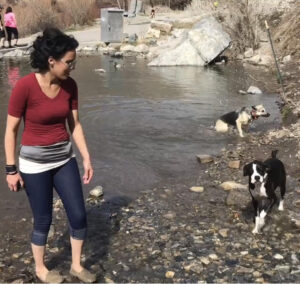
This weekend we took our dogs up Provo Canyon to Bridal Veil Falls…and it was busy! So many people and so many other dogs. 

My boxer mix has a history of lunging and being reactive to other dogs. 

If I don’t correct him in the moment he is thinking about lunging, it can turn very messy very quickly.

And especially my experiences with my boxer up this canyon have always been negative. I started training him once winter started, and we have not traversed this section of the city since then.  To be respectful of other people I had him on his prong collar and a short 2′ leash. However, the second we started down the path I was anxious, nervous, expecting the worst, and very tense.

Of course my dog picked up on my energy as dogs will. He wasn’t paying attention to me, he had high energy, and my corrections on the prong were not as effective. When I train, I tell all my clients to relax and forget that their dog was ever a bad dog, and I wasn’t even taking my own advice.

Finally, my husband noticing something was wrong, stopped me and said “Okay, this isn’t working.” He turned to me, “These dogs are off-leash trained and they do great. I’m going to let them off their leash and we are going to continue just like you’ve been doing for the last 2 months. And everything is going to be fine.” Dogs were let off the leash and on we continued.

With that small reminder my shoulders relaxed, my jaw muscles loosened, my arms started to swing more naturally, and the sound and enjoyment came back into the day. Immediately the dogs were responsive, attentive to me and more obedient. We had a great walk, they went swimming and they were the best behaved dogs up there. My husband even asked me after “Did I see all the people staring at me and the dogs because they were so obedient and well-behaved?” Coming when called, heeling, running and sniffing and then coming back to heeling when we moved on. 

I felt a little sheepish that I wasn’t able to take my own advice in this instance. My memories and experiences of what it used to be like up this canyon crowded out the 2 months of incredible work and trust I’ve had with my dogs. 

For people like me who had “bad” dogs that are now good dogs it can be hard to forget. We get around places or people where our memories tell us this was always a negative experience and we prepare for that negative experience….thereby causing the negative experience.

To all these people I say…chin up! It’s a new day, and a new dog!
More Tips

Check out our other posts

Protective or Possessive? The Truth About Dogs That Guard Their Owners

Is your dog truly protecting you, or are they acting out of fear and possessiveness?

Many owners mistake controlling behaviors for loyalty, but allowing your dog to make decisions about who can approach you can lead to stress, anxiety, and even aggression. In this guide, you’ll learn how to recognize the difference between protective and possessive behavior, why teaching trust is the key to a calm and confident dog, and the training techniques that create lasting results.

Whether you’re searching for expert dog training in Utah County or Salt Lake City, Utah, these practical tips will help you build a safer, happier relationship with your dog.

Read More »

Mental Fatigue vs. Physical Fatigue in Dogs: The Key to Better Behavior

Have you ever taken your dog on a long walk only to come home and watch them race around the house with endless energy?

You’re not alone. Many dog owners focus on physical exercise to tire out their dogs, but mental stimulation is often the missing piece. In this article, you’ll learn the difference between mental and physical fatigue in dogs, why activities like training, sniffing, and problem-solving can be just as exhausting as a long walk, and how balancing both types of exercise can reduce unwanted behaviors like pulling on the leash, jumping, barking, and destructive chewing.

Whether you have a playful puppy or an energetic adult dog, these simple strategies will help you raise a calmer, happier, and more well-behaved companion.

Read More »

Is Your Dog Too Trained? Why Constant Commands Can Backfire

Most dog owners think more training leads to better behavior—but that’s not always true.

If your dog only listens when you’re giving commands, they may be relying on you instead of learning self-control.

Discover how overtraining can create dependence, why constant correction often backfires, and how teaching your dog to make good decisions leads to calmer, more reliable behavior at home and in the real world.

Read More »

The Surprising Reason Your Dog Mirrors Your Emotions

Ever wonder why your dog seems to get more excited, anxious, or reactive when you’re stressed?

Dogs are experts at reading human emotions, and your body language, tone of voice, and energy can directly influence their behavior.

Discover why calm humans create calm dogs and learn simple training habits that lead to less pulling, less barking, and a more confident, well-behaved companion.

Read More »