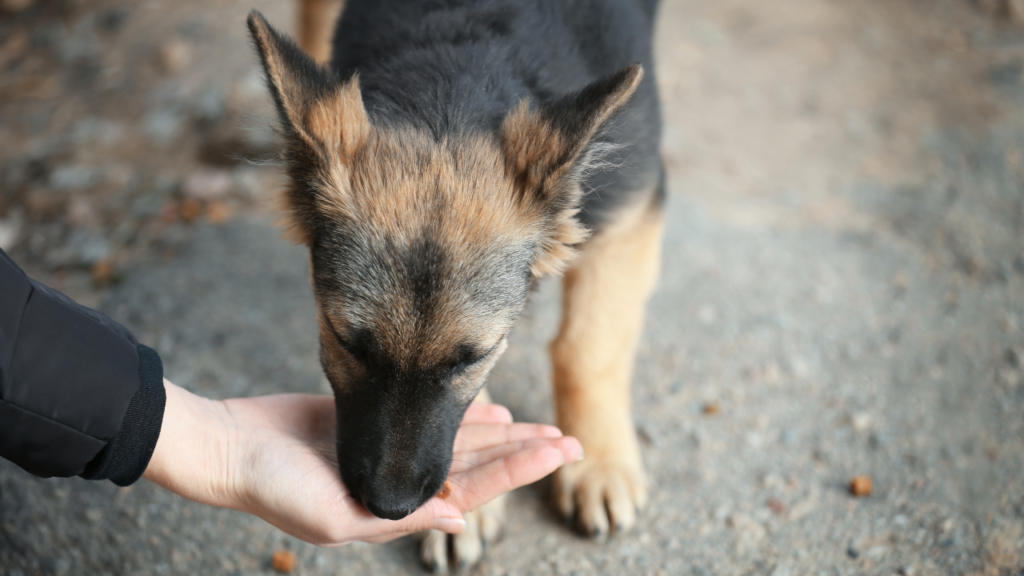

You’ve just opened the front door of your home. Doesn’t really matter who’s on the doorstep. Fido is at it again. He’s been barking since he heard the car pull up, the guest get out, and then the doorbell ring. You gave him a firm “no” but he blew right past you to yip at the door.
Now’s the time you start raising your voice, “Fido, no! No Fido! Bad boy!” With each phrase you get louder and louder. You pick him up, grab him by the collar, or put your body in front of him as you open the door. “Don’t mind the dog…come on in” you tell the guest. Now honestly, how stressed are you?
I bet some dirty thoughts are going through your head about how naughty Fido is, and what a bad dog he is. The number one thing clients tell me at this point is: “They KNOW their dog is smarter than this. Why can’t he just act that way?”
And they are right. Their dog is smarter than that. And I can tell you why he’s not acting that way. He doesn’t know what the word no means. You might as well be screaming “pineapple!” “yogurt!” “tomato!” He’s already pushed the button for the emotional rocket launch and darned if anything is going to stop him!
HELPING THEM UNDERSTAND
So how do you help him understand the value of the word no? Simple. There needs to be a consequence for his action. Understand, you are not punishing the dog. This is not done out of anger. This is a simple “if you bark at the door you will feel uncomfortable”. Same as telling a toddler “if you put that lemon in your mouth it will be sour, and you will spit it out”.
HOW YOU ACTUALLY DO IT
So how do you actually do it? Do you use food? Praise? After all, you don’t want to hurt your baby’s feelings or stress him out. REALITY CHECK PEOPLE: he’s hurting you….he’s causing you stress…and he’s causing you embarrassment in front of your guests. But even if that weren’t the case: the dog’s language is a language of consequences. Positive and negative consequences.
Food will not work at this point since he’s already escalated. Would a donut stop you if you knew someone dropped a million dollars on the front doorstep? DEFINITELY not.
In order to get the dog’s attention I use two different kinds of tools. The prong collar and the e-collar. I’m not here to defend the prong collar or ecollar. It works…it’s humane…and my clients love it. Why? Because they have spouses, jobs, kids and lives that are more important. They don’t have weeks and weeks to train their dog. They want it done humanely and quickly. A quick “pop” on the prong collar, or correction on the ecollar and the behavior is stopped immediately.
HOW DOES THIS RELATE TO THE WORD NO?
You are giving the word “no” value. The dog realizes “Hey…that was uncomfortable! When Mom/Dad says “no” I’m not going to do that again!”
Once this happens (which takes a matter of seconds)…you’ll have the dog’s attention. It’s at this point that you can give the dog a command “sit, down, stay, place, kennel” and reward with food or praise. Now that you have the dog’s attention you can ask behaviors of him.
Thanks for reading and good luck!