
If you’ve ever tried to groom your dog and ended up frustrated, exhausted, or even a little scratched up—you’re not alone. Most dog owners assume their dog “just hates grooming,” but that’s not actually the real issue. The truth is, grooming becomes a battle when dogs haven’t been taught how to calmly accept handling in the first place. So every brush stroke, nail trim, or bath feels overwhelming to them—and chaotic for you.
The good news? This isn’t about forcing your dog to tolerate grooming. It’s about teaching simple, practical skills that make the entire process faster, easier, and way less stressful on your end. When your dog understands how to stay still, relax, and cooperate, everything changes.
Most owners think grooming is the issue—but it’s actually a much bigger pattern. In fact, this same misunderstanding shows up in everyday behavior problems too. If you want to see how this plays out beyond grooming, check out this breakdown of The #1 Mistake Dog Owners Make That Keeps Bad Behavior Going.
Grooming stops feeling like a fight and starts becoming just another routine you can get through quickly and confidently. Let’s break down how to make that happen.
How to Groom Your Dog Without Getting Bit, Scratched, or Wrestled
Let’s be honest—most people don’t mind grooming their dog… they mind the fight that comes with it. If you’re bracing yourself every time you grab the brush, dreading nail trims, or worried you might get scratched (or worse), you’re not the problem—and your dog isn’t “bad.” You’re just stuck in a cycle that was never set up for success.
When dogs bite, squirm, pull away, or turn grooming into a full-body wrestling match, it’s not because they hate you or even hate grooming itself. It’s because no one ever taught them how to handle being handled. To them, hands grabbing paws, holding their face, or restraining their body feels unpredictable—and when dogs feel uncertain, they resist. That resistance is what turns a simple task into a stressful, sometimes painful experience for you.
Here’s the shift most owners miss: grooming should never start with tools—it should start with cooperation. If your dog doesn’t know how to stay still, relax under pressure, or accept touch in sensitive areas, then adding clippers or nail trimmers just escalates the situation. You don’t fix the problem by pushing through it—you fix it by changing what your dog understands about the process.
When you teach calm handling, everything changes. Your dog learns that your touch isn’t something to fight—it’s something predictable and safe. That means less flinching, less pulling away, and no more sudden reactions that leave you scratched or frustrated. Instead of trying to overpower your dog, you’re guiding them into a state where grooming becomes just another routine.
And here’s the part that matters most to you: when your dog is calm and cooperative, grooming gets faster, easier, and a whole lot safer. No more chasing them around the house. No more stopping halfway because it’s “too much.” No more turning a five-minute task into a thirty-minute battle.
You don’t need more patience. You don’t need better tools. You need a dog that understands how to work with you instead of against you. And that starts with teaching the right skills before the grooming even begins.
How to Cut Grooming Time in Half (Without a Struggle)
Let’s cut straight to it—most dog owners don’t actually care about grooming being “a bonding experience.” They care about one thing:
“How fast can I get this done without it turning into a whole situation?”
You’ve got a schedule. Maybe you’re squeezing this in before work, before guests come over, or before your dog starts smelling like… well, a dog. The last thing you want is to turn a quick brush or nail trim into a 30-minute wrestling match that leaves both of you stressed out.
And yet—that’s exactly what happens.
Your dog won’t stay still. They pull their paw away. They twist, sit, mouth your hands, or try to escape entirely. So what should’ve taken five minutes drags on… and on… and on. Now you’re frustrated, they’re overwhelmed, and the whole thing feels like a chore you start avoiding.
Here’s the truth most people miss: slow grooming isn’t caused by grooming—it’s caused by lack of cooperation.
You can have the best tools in the world, the perfect setup, even the right technique… but if your dog won’t stay still, none of that matters. Every second you spend repositioning them, chasing them, or trying to “hold them down” is what’s actually eating up your time.
So the real question becomes:
“How do I get my dog to just stand there so I can get this done?”
And the answer isn’t force. It’s training.
When a dog is taught how to be handled—how to stay calm, how to accept touch, how to hold position without constantly reacting—everything speeds up. You’re not stopping every two seconds. You’re not restarting the process over and over. You’re moving through grooming smoothly, efficiently, and without resistance.
Think about it this way: a cooperative dog turns grooming into a straight line. An untrained dog turns it into a zigzag.
When your dog understands what’s expected, you can brush, trim, or clean in a fraction of the time because there’s no interruption. No drama. No reset button every 10 seconds.
So if your goal is to “just get it done already,” the fastest path isn’t rushing—it’s teaching your dog how to work with you. Because a dog that stands still, relaxes, and cooperates doesn’t just make grooming easier…
They make it quick.
If you’re tired of wasting time and just want a dog that cooperates so you can get things done quickly, you don’t have to figure this out alone. You can reach out directly here:
Stop Wasting Money on Groomers Your Dog Fights Anyway
Let’s talk about something that gets people’s attention fast—your wallet.
Hiring a groomer is supposed to make life easier. You drop your dog off, pick them up clean, done. But that’s not the reality for a lot of owners. Instead, you’re dealing with repeat visits, added fees, and awkward conversations that sound like, “Your dog was… a bit difficult today.”
And “a bit difficult” usually comes with a higher price tag.
If your dog fights the process—pulling away, thrashing, snapping, or refusing to cooperate—groomers have to spend extra time managing behavior before they can even start grooming. That means:
- Longer appointments
- Special handling fees
- In some cases, being asked not to come back
Now you’re either paying more… or scrambling to find someone willing to take your dog.
Here’s the part most people don’t realize:
You’re not paying for grooming—you’re paying for unmanaged behavior.
Groomers aren’t there to train your dog. Their job is to get in, get it done, and keep things safe. So when your dog doesn’t know how to be handled, everything becomes harder, slower, and more stressful—for them and your bank account.
And let’s be honest, there’s also that subtle embarrassment. Nobody loves hearing that their dog was “the problem” that day.
But this is actually good news—because it means the situation is fixable.
When you invest a little time into handling training at home, you change the entire experience. Your dog learns how to stay still, accept touch, and cooperate instead of resist. That means when they go to the groomer, they’re easier to work with, faster to finish, and far less likely to rack up extra charges.
Or better yet—you may not need the groomer as often at all.
Basic maintenance like brushing, wiping, and even simple trims become manageable at home when your dog isn’t fighting you every step of the way. That alone can save you hundreds over time.
So instead of throwing money at a problem that keeps coming back, you fix the root of it. A dog that understands handling doesn’t just make grooming smoother—they make it cheaper, more predictable, and way less stressful for everyone involved.
Because at the end of the day, the goal isn’t just a clean dog…
It’s a dog that doesn’t cost you extra every time you try to get them there.
You’re not the only one dealing with this. A lot of dog owners are going through the exact same thing—and sharing what’s working. You can join the conversation here: https://www.facebook.com/groups/dogsunleashedutahcounty
How to Make Your Dog Stand Still So You Can Actually Get It Done
Let’s call out the real issue most dog owners are dealing with:
It’s not brushing.
It’s not nail trimming.
It’s not even grooming.
It’s the fact that your dog won’t stand still long enough to get anything done.
You start with good intentions—grab the brush, maybe the nail clippers—and within seconds your dog is wiggling, sitting, spinning, pulling their paw away, or walking off like they’ve got somewhere better to be. Now you’re readjusting, trying to hold them in place, getting frustrated… and eventually? You give up halfway through.
Sound familiar?
Here’s the truth:
Stillness is not something dogs just “do.” It’s something they’re taught.
Most dogs have never learned that staying still is even part of the deal. In fact, they’ve often learned the opposite. Every time they pull away and you stop, every time they wiggle and you pause, every time you say “okay, we’ll try later,” you’re accidentally teaching them:
“If I move enough, this goes away.”
So the behavior continues—and even gets stronger over time.
Now instead of a quick grooming session, you’ve got a dog that won’t cooperate at all.
The fix isn’t forcing your dog to hold still. That usually makes things worse and creates more resistance. The fix is teaching stillness as a skill, just like you would “sit” or “stay.”
You start small. Really small.
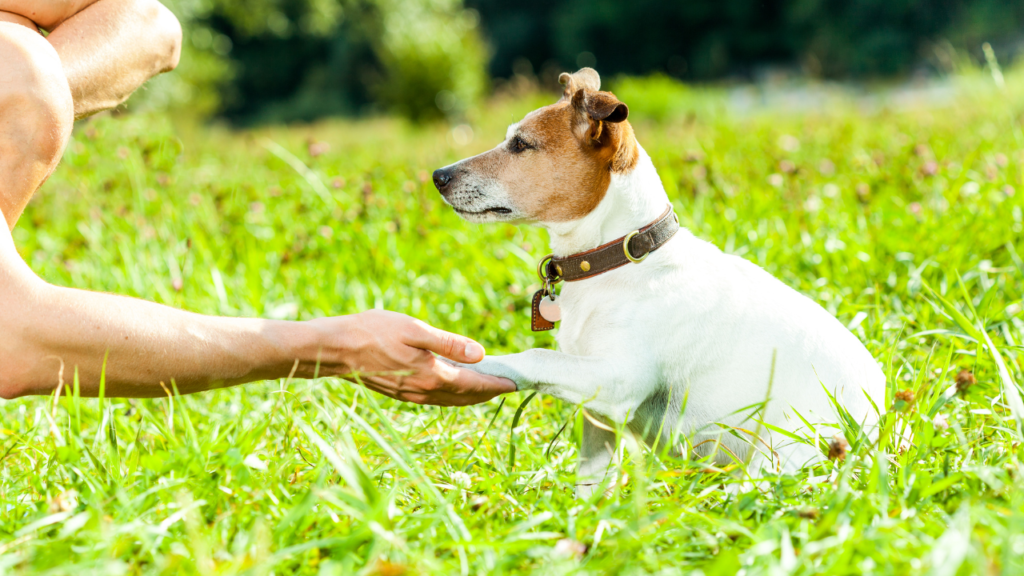
Touch your dog → reward.
Lightly hold a paw → reward.
Ask for one second of stillness → reward.
You’re building a clear understanding:
“When I stay still, good things happen. When I relax, nothing bad follows.”
From there, you gradually increase expectations. A few seconds becomes ten. Ten becomes thirty. Before you know it, your dog can calmly stand while you actually complete a task instead of restarting it over and over again.
And here’s where it clicks for most owners:
When your dog knows how to be still, everything else becomes easier.
Brushing is smoother. Nail trims are quicker. Baths are less chaotic. You’re no longer chasing cooperation—you already have it.
So if you’re tired of the wiggling, the stopping, and the half-finished jobs, stop trying to rush through grooming…
And start teaching your dog how to stand still in the first place.
Conclusion
At the end of the day, grooming doesn’t have to be a battle, a time drain, or an ongoing expense that keeps frustrating you. If your dog is fighting the process—whether at home or with a groomer—it’s not because grooming is the problem. It’s because your dog hasn’t been taught how to calmly accept handling and cooperate through it.
Once you shift your focus from “just getting it done” to actually teaching your dog what’s expected, everything starts to click. Grooming becomes faster. It becomes easier. And most importantly, it becomes predictable. No more wrestling, no more wasted time, and no more paying extra for behavior that can be fixed.
A well-trained dog doesn’t just look better—they make your life easier. And that’s really the goal here.