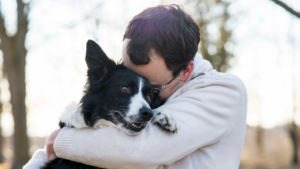
Being calm doesn’t mean being a pushover. When you consistently follow through on boundaries, your dog learns that whining, pulling, jumping, or ignoring you won’t change the rules—and everyday life gets a whole lot easier.
Being calm with your dog is a good thing—but being calm doesn’t mean constantly giving in. If you set a boundary and then change your mind because your dog whines, pulls, jumps, barks, or gives you that look, your dog learns something very quickly: your boundaries are negotiable.
Dogs pay attention to what works. If pulling eventually gets them where they want to go, pulling works. If jumping eventually earns attention, jumping works. And if ignoring your first five commands gets them out of doing something, ignoring you works too.
This isn’t about being dominant, intimidating, or harsh with your dog. It’s about being calm and consistent. Your dog should be able to predict that when you set a reasonable boundary, you’ll follow through.
Because the easier it is for your dog to understand your expectations, the less you’ll need to nag, argue, bribe, or lose your patience later.
Why Your Dog Listens Only When You Have Treats
Does your dog suddenly become the world’s best listener the second you reach for the treat bag?
You say “sit,” and they sit. You say “come,” and they come running. You ask them to leave something alone, and they happily cooperate—as long as they know there’s a snack waiting for them.
But take the treats away, and suddenly your dog acts like they’ve never heard a command in their life.
What happened?
Treats are an awesome training tool. We use rewards because they help dogs understand which behaviors we want to see more often. The problem isn’t using treats. The problem is when your dog learns that listening only matters when they can see the payment first.
Your Dog May Be Waiting for a Better Deal
Dogs are incredibly good at recognizing patterns.
If every request starts with you showing them a treat, your dog can begin treating your commands like a negotiation.
“Come!”
What do I get?
“Leave it!”
Show me the treat first.
“Let’s go!”
Is there chicken involved?
Before you know it, you’re carrying treats around the house just to get your dog to do basic things they already know how to do.
That’s exhausting.
Stop Bribing and Start Building Consistency
The goal of training isn’t to eliminate rewards. It’s to make sure your dog understands that your expectations don’t disappear when the treats do.
If you ask your dog to do something they already understand, calmly follow through.
Don’t repeat yourself ten times. Don’t immediately reach for a better treat. And don’t give up because your dog decides they’d rather do something else.
Your dog needs to learn that ignoring you doesn’t make the request disappear.
That doesn’t mean yelling, intimidating your dog, or getting angry. It means being clear, patient, and consistent.
Consistency Makes Your Life Easier
Think about why you trained your dog in the first place.
You probably didn’t do it because you wanted to spend the next ten years walking around with chicken in your pocket.
You want a dog who comes when called, walks nicely with you, respects boundaries, settles down when guests arrive, and listens even when life gets distracting.
Rewards can help you build those behaviors. Consistency is what helps make them reliable.
Be calm. Reward good choices. Follow through on reasonable expectations.
Because your dog shouldn’t have to see the treat before deciding whether you’re worth listening to.
Stop Repeating Yourself 10 Times: Your Dog Heard You the First Time
“Sit.”
“Sit.”
“Come on… SIT.”
“Buddy, SIT!”
“SIT!”
Sound familiar?
One of the most frustrating things for dog owners is feeling like their dog only listens after being asked five, six, or ten times. Eventually, you raise your voice, the dog finally does it, and you’re left wondering why they can’t just listen the first time.
Here’s the uncomfortable part: you may have accidentally taught your dog that the first command doesn’t matter.
Your Dog Is Learning From the Pattern
Dogs are excellent at recognizing patterns.
If you regularly say “sit” five times before anything happens, your dog can learn that the first four repetitions are basically background noise.
Think about what the dog experiences:
“Sit.” Nothing happens.
“Sit.” Still nothing.
“Sit.” No consequence.
“SIT!” Now the human means it.
Your dog isn’t necessarily being stubborn or disrespectful. They may simply be responding to the pattern you’ve practiced together.
Without realizing it, you’ve taught them that they don’t need to respond until your voice gets louder.
Say It Once, Then Help Them Succeed
Instead of repeating the command over and over, give your dog one clear instruction.
Then give them a reasonable moment to respond.
If your dog understands the command but chooses not to follow it, calmly follow through using the training method you’ve taught them. The exact follow-through will depend on the behavior, environment, and your dog’s level of training.
The important part is consistency.
You don’t need to yell.
You don’t need to get angry.
And you definitely don’t need to turn “sit” into a ten-minute argument.
Your dog should learn that the first request matters.
Clear Communication Creates a Calmer Dog
Imagine being able to say “place” when someone knocks on the door—and your dog actually goes to their place.
Imagine saying “let’s go” on a walk without having to repeat yourself while your dog stares at a squirrel.
Imagine calling your dog away from something and having them respond the first time.
That’s not about controlling your dog every second of the day. It’s about creating communication your dog understands and can reliably respond to.
And there’s another benefit: you become calmer too.
When you stop repeating, nagging, escalating, and eventually yelling, training becomes much less frustrating for everyone.
Say what you mean.
Give your dog a chance to respond.
Then calmly and consistently follow through.
Because if “sit” only matters after the tenth time, your dog has learned exactly what you’ve been practicing.
Want More Freedom? Give Your Dog Better Boundaries
Most dog owners don’t want to spend their entire day managing their dog.
You don’t want to constantly say “no.” You don’t want to wrestle with the leash every time you go for a walk. You don’t want to lock your dog in another room whenever someone comes over.
You want to enjoy your dog.
You want to relax on the couch without your dog demanding attention every five seconds. You want friends to walk through the front door without being jumped on. You want to go for a walk without feeling like you’re being dragged behind a furry tractor.
And maybe you’d actually like to take your dog to a patio, park, family gathering, or vacation without wondering what kind of chaos is about to happen.
Here’s what many owners miss:
More freedom usually starts with better boundaries.
Boundaries Aren’t About Controlling Everything
Some owners hear the word “boundaries” and imagine being strict about every little thing their dog does.
That’s not the goal.
Good boundaries simply help your dog understand what behaviors work and which ones don’t.
Jumping doesn’t earn attention.
Pulling doesn’t make the walk move faster.
Barking at you doesn’t magically produce what your dog wants.
Ignoring a known command doesn’t make the request disappear.
When those expectations stay consistent, your dog doesn’t have to constantly test what works today.
A Dog With Boundaries Can Do More
Think about two dogs.
One dog pulls everywhere, jumps on strangers, ignores their owner around distractions, and can’t settle down.
The other dog understands how to walk calmly, give people space, settle when asked, and respond to their owner.
Which dog gets invited more places?
Usually, the second one.
That dog can enjoy more of the world because their owner trusts them.
That’s the beautiful thing about boundaries: they can actually create freedom.
Make Your Own Life Easier
Good dog training shouldn’t make your life feel like one giant training session.
It should eventually make everyday life easier.
When your dog understands the rules, you spend less time correcting, chasing, repeating yourself, apologizing to guests, and avoiding situations you wish you could enjoy.
You can simply live with your dog.
So if you want to give your dog more freedom, don’t start by removing every rule.
Start by making your boundaries clearer.
Be fair. Be calm. Be consistent.
Because the dog who understands where the boundaries are is often the dog who earns the freedom to go almost anywhere with you.
Being the Nice Owner Can Create More Work for You
Nobody gets a dog because they want to spend their day arguing with one.
You love your dog. You want them to be happy. So when they whine at the door, you let them out. When they jump up for attention, you pet them. When they pull toward something interesting on a walk, sometimes you just follow because it’s easier than fighting about it.
And when they refuse to do something?
Maybe you sigh and think, “Fine. Whatever.”
It feels like you’re being nice.
But there’s a problem: your dog may think you just rewarded them.
Your Dog Pays Attention to What Works
Dogs learn from consequences.
If whining gets the door opened, whining worked.
If jumping gets attention, jumping worked.
If pulling gets them to the exciting smell, pulling worked.
If refusing a command long enough makes you give up, refusing worked.
Your dog isn’t sitting around plotting how to take over your house. They’re simply learning which behaviors produce the results they want.
And dogs are very good at repeating behaviors that work.
That means every time you give in because you’re tired, busy, embarrassed, or just don’t feel like dealing with it, you may accidentally make that behavior stronger.
Being Kind and Holding Boundaries Can Coexist
Having boundaries doesn’t mean you need to become angry, intimidating, or harsh.
You can absolutely be loving while still saying, “No, that behavior isn’t going to get you what you want.”
If your dog jumps for attention, wait for the behavior you actually want before giving affection.
If pulling is how your dog tries to reach something exciting, don’t teach them that dragging you there is the fastest route.
If your dog knows what you’re asking but refuses, don’t immediately abandon the request just because waiting them out is inconvenient.
Calm consistency is kindness too.
A Little Work Now Can Save You Months Later
Here’s where being “nice” can actually make your life harder.
The cute puppy who jumps on you at 15 pounds may become the 70-pound dog knocking into your guests.
The puppy pulling toward every smell can become the adult dog dragging you down the sidewalk.
The whining you tolerate occasionally can become the soundtrack to your entire evening.
Behavior gets stronger when it keeps working.
So instead of asking, “How do I make my dog happy right now?” try asking:
“What am I teaching my dog for next time?”
You don’t need to win a battle with your dog.
You need to be predictable.
Stay calm. Set fair boundaries. Follow through consistently.
A few moments of patience today can save you months—or even years—of frustration tomorrow.
Conclusion
Your dog doesn’t need you to yell, intimidate, or constantly bribe them with treats. They need clear communication, consistent boundaries, and an owner who calmly follows through. Whether you’re struggling with leash pulling, jumping on guests, ignoring commands, potty training, or everyday obedience, changing the pattern starts with changing what your dog learns from you.
Our goal isn’t a robotically obedient dog. It’s a dog you can confidently walk, live with, invite around guests, and take more places without constant frustration.
If you’re searching for a professional dog trainer near you, it may be time to stop repeating yourself and start building boundaries your dog can actually understand.