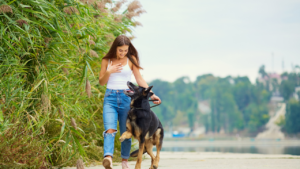
A dog that is calm at home but wild outside isn’t being stubborn—they’re overwhelmed by stimulation they haven’t learned to handle. With consistent training and clear leadership, your dog can stay calm and focused whether you’re walking through your neighborhood in Utah County or exploring parks around Salt Lake City, Utah.
Does your dog act like the perfect companion inside your home but turn into a completely different dog the moment you step outside? If you’re a dog owner in Utah County or Salt Lake City, Utah, you’re not alone. This is one of the most common concerns we hear from families looking for professional dog training. While many people assume their dog is being stubborn or intentionally ignoring them, the real issue is usually overstimulation. Your home is familiar, quiet, and predictable, while the outside world is filled with exciting sights, sounds, smells, people, and other dogs. Without the right training, many dogs struggle to regulate their emotions in these environments. The good news is that calm behavior can be taught. In this article, we’ll explain why your dog behaves differently outside, the mistakes that often reinforce the chaos, and how balanced, consistent dog training can help you enjoy calm walks.
Your Dog Is Calm at Home Because Home Is Predictable
One of the biggest misconceptions dog owners have is believing that a dog who behaves perfectly inside the house should naturally behave the same way outside. Unfortunately, dogs don’t see those environments as equal. Your home is familiar, quiet, and predictable. Your dog knows where everything is, understands the routine, and rarely encounters anything surprising. Outside is an entirely different experience.
The moment you step out the front door, your dog’s brain is flooded with new information. There are unfamiliar smells, passing cars, barking dogs, squirrels, bicycles, children playing, and countless distractions competing for their attention. Even a normally well-behaved dog can become overstimulated if they haven’t learned how to stay calm around all of that excitement.
This is why many families looking for dog training in Utah County or Salt Lake City, Utah tell us the same thing: “My dog is perfect at home, but the second we go for a walk, they pull, bark, lunge, or completely ignore me.”
The issue usually isn’t that your dog is stubborn or trying to embarrass you. More often, they simply haven’t developed the skills to regulate their emotions in stimulating environments. Think of it like asking someone who’s only practiced driving in an empty parking lot to suddenly navigate rush-hour traffic. The environment changed, but their ability to handle it didn’t.
Many owners unknowingly assume that because their dog knows commands like “sit” or “down” in the living room, those behaviors will automatically transfer to the neighborhood sidewalk or a busy park. In reality, dogs don’t generalize behaviors as easily as people do. They need guidance and practice in different locations before those skills become reliable.
Instead of simply teaching commands, effective training builds emotional control, confidence, and the ability to make good decisions under distraction. That’s what transforms chaotic walks into enjoyable ones.
Whether you’re strolling through your neighborhood, visiting parks around Salt Lake City, or exploring local trails in Utah County, your goal isn’t to eliminate your dog’s excitement. It’s to teach them that they can notice the world without becoming overwhelmed by it. A calm dog isn’t bored—they’ve learned how to enjoy their environment without letting it control their behavior.
Your Walks Are Probably Rewarding the Chaos
It can be frustrating when every walk feels like a battle. Your dog pulls toward every tree, lunges at other dogs, or drags you from one exciting smell to the next. Many owners assume their dog is simply energetic or stubborn, but in reality, they’re often reinforcing the very behaviors they want to stop—without even realizing it.
Dogs learn through consequences. If pulling on the leash gets them closer to another dog, a fire hydrant, or an interesting scent, then pulling worked. If barking makes another dog move away, barking was rewarded. Every successful repetition teaches your dog, “This behavior gets me what I want.”
This is one of the biggest reasons families contact us for dog training in Utah County and Salt Lake City, Utah. They aren’t intentionally encouraging bad habits, but everyday walks have unknowingly become training sessions that reward excitement instead of calmness.
Think about your typical walk. Your dog feels tension on the leash, pulls forward, and eventually reaches the destination they wanted. From your dog’s perspective, pulling was the correct answer. Even stopping occasionally before continuing often isn’t enough if the reward eventually comes. Dogs repeat behaviors that consistently produce results.
The same thing happens when owners allow their dog to greet every person or every dog they see. While social interaction can be positive, constantly rewarding overexcited behavior teaches your dog that losing control is how they earn fun experiences. Before long, they begin expecting every walk to be an exciting event instead of a calm activity you enjoy together.
This doesn’t mean your dog should never sniff, explore, or greet people. Those are natural behaviors that contribute to a happy life. The difference is teaching your dog that calm behavior opens the door to those rewards. A loose leash, attention to the handler, and emotional self-control should come first.
Teach dogs that staying connected with their owner leads to everything they enjoy—whether that’s moving forward, exploring a park, or greeting someone politely. Over time, calm behavior becomes the habit because it’s consistently reinforced.
The goal isn’t to eliminate your dog’s enthusiasm—it’s to channel it into behavior that makes walks enjoyable for both of you. When your dog understands that calmness, not chaos, earns rewards, you’ll start looking forward to your walks instead of dreading them.
A Calm Dog Gives You More Freedom
When most people think about dog training, they picture teaching commands like “sit,” “stay,” or “come.” While those skills are important, the real value of training goes far beyond obedience. A calm, well-mannered dog gives you more freedom, less stress, and the confidence to enjoy life together wherever you go.
Many dog owners don’t realize how much their dog’s behavior influences their daily routine. Maybe you’ve stopped taking walks because your dog pulls so hard that your shoulders ache. Maybe you avoid parks because you’re worried they’ll bark at other dogs. Or perhaps you think twice before inviting friends over because your dog jumps on every guest who walks through the door.
Over time, it’s easy to start planning your life around your dog’s behavior instead of enjoying life with your dog.
That’s why so many families seek dog training in Utah County and Salt Lake City, Utah. They’re not looking for a robot that follows commands perfectly—they want a companion they can confidently include in everyday life.
Imagine being able to enjoy a relaxing evening walk through your neighborhood without constantly fighting the leash. Picture taking your dog to outdoor restaurants, local festivals, family gatherings, or community events without worrying about embarrassing behavior. Think about hiking the beautiful trails throughout Utah County or exploring dog-friendly parks around Salt Lake City knowing your dog can stay calm and focused, even with distractions all around.
That’s the freedom good training creates.
One of the biggest myths in dog ownership is that calm dogs are somehow less happy or less fun. In reality, the opposite is often true. Dogs that understand expectations and know how to regulate their emotions experience less frustration and anxiety. Instead of reacting to everything they see, they can enjoy the environment while remaining connected to their owner.
Professional training isn’t about taking away your dog’s personality. It’s about giving them the skills to make better choices. Your dog can still play, explore, sniff, and have plenty of fun—they simply learn when excitement is appropriate and when it’s time to focus.
The greatest reward isn’t having a dog that impresses your neighbors. It’s having a dog that fits naturally into your lifestyle. Whether you’re running errands, meeting friends, walking through downtown Salt Lake City, or enjoying a quiet afternoon in your local neighborhood, a calm dog makes every outing easier.
At the end of the day, the goal isn’t perfection. It’s freedom. Freedom to go more places, do more activities, create more memories, and enjoy your dog instead of constantly managing unwanted behavior. That’s what effective dog training is really about—and why investing in your dog’s behavior is also an investment in your own quality of life.
Excitement Isn’t the Same as Happiness
It’s easy to mistake an excited dog for a happy dog. Tail wagging, bouncing around the house, pulling hard on the leash, and racing from one distraction to the next can look like pure joy. Many owners even describe these behaviors as their dog’s “personality.” But excitement and happiness are not the same thing.
Excitement is a temporary emotional state. Happiness is a long-term sense of security, confidence, and contentment.
A dog that cannot settle, constantly reacts to every sound, or loses focus the moment they leave the house isn’t necessarily having more fun. In many cases, they’re struggling to process everything happening around them. Their brain is operating in a heightened state of arousal, making it difficult to think clearly, listen to cues, or make good decisions.
This is one of the most common issues we address through dog training in Utah County and Salt Lake City, Utah. Owners often tell us they don’t want to “take away their dog’s spark” by teaching calm behavior. The reality is exactly the opposite. Teaching a dog how to relax doesn’t erase their personality—it gives them the ability to enjoy life without becoming overwhelmed by every distraction.
Think about people for a moment. Living in a constant state of excitement or stress is exhausting. We all need moments to slow down, recharge, and feel grounded. Dogs are no different. They need opportunities to rest, observe, and simply exist without feeling the need to react to everything around them.
A truly happy dog can switch between play and relaxation with ease. They can enjoy chasing a ball in the backyard, hiking a trail, or greeting familiar friends, then settle calmly afterward. That emotional flexibility is a sign of balance, not boredom.
Instead of relying on constant correction or endless exercise, effective training teaches dogs emotional regulation. They learn that not every squirrel needs to be chased, not every passing dog requires a greeting, and not every new sound deserves a reaction. As a result, they become more confident, more attentive, and far easier to live with.
Playfulness and enthusiasm are wonderful qualities. The goal is to help your dog recognize when it’s time to play and when it’s time to remain calm and connected.
The happiest dogs aren’t the ones living in constant chaos. They’re the ones who feel secure enough to relax, confident enough to ignore distractions, and connected enough to enjoy life’s adventures right alongside their owners. That’s the difference between a dog that’s simply excited and a dog that’s truly fulfilled.
Conclusion
If your dog is calm at home but turns into a whirlwind the moment you step outside, you’re not dealing with a “bad” dog—you’re seeing a dog that hasn’t yet learned how to handle a more stimulating environment. The good news is that calmness is a skill, and like any skill, it can be taught with consistency, patience, and the right guidance. The goal isn’t to suppress your dog’s personality or enthusiasm. It’s to help them develop the confidence and self-control to enjoy the world without becoming overwhelmed by it. Whether you’re taking daily walks around Utah County, visiting parks in Salt Lake City, or simply wanting a more enjoyable life with your dog, investing in professional dog training can make all the difference. At Be the Boss Dog Training, we help dogs and their owners build lasting habits that create calmer walks, stronger relationships, and more freedom to enjoy life together. A calm dog isn’t boring—it’s the foundation for a happier life for both ends of the leash.