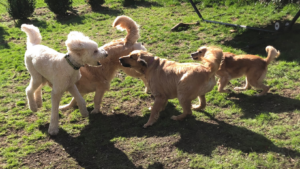
Socializing a dog is one of the most misunderstood aspects of training. People assume that throwing their dog into a group of other dogs or taking them to a busy place automatically creates a well-adjusted pet. But socialization is not exposure. True socialization is about teaching your dog how to exist in the world confidently and safely—without fear, stress, or overstimulation.
Most dog owners wait until their dog is already reacting—barking, growling, or snapping—before realizing they’re overwhelmed. But by the time your dog is “screaming” their discomfort, you’ve already ignored the quiet, desperate whispers.
The key is catching the pre-overwhelm signs. This is where most owners fail their dogs. They don’t read the room, they don’t read their dog, and they assume all stress responses look dramatic.
Let’s break this down.
The Subtle Signs of Overwhelm
Before a dog reaches their breaking point, they display subtle, almost imperceptible cues that indicate stress—long before they resort to barking, growling, or fleeing.
A dog that suddenly freezes in place isn’t simply calm; they’re overwhelmed, assessing their surroundings, and bracing themselves for what might come next. If you notice their eyes darting while their head remains still, revealing the whites of their eyes—often called “whale eye”—it’s a clear sign they feel uneasy. Many dogs will also lick their lips or yawn excessively, a commonly misinterpreted stress response mistaken for tiredness.
Panting when they haven’t been active or the temperature isn’t warm is another red flag, signaling nervous energy rather than physical exertion. Some dogs will attempt to self-soothe by sniffing the ground obsessively or scratching at themselves, seemingly distracted but actually trying to regain composure. Others avoid confrontation entirely by turning their head away from a dog or person they don’t feel comfortable engaging with.
Each of these behaviors is a warning that your dog is experiencing discomfort, yet they’re often dismissed as harmless quirks. If ignored, these whispers of unease will grow into more obvious cries for help—whining, pacing, barking, or even snapping—forcing your dog into a defensive state they never wanted to be in. Recognizing these signs early is the key to preventing a stressful situation from escalating into something more serious.
Key Signs of Overwhelm:
✔ Freezing – Stiffening and stopping movement, not calmness
✔ Whale Eye – Seeing the whites of their eyes from darting glances
✔ Lip Licking/Yawning – Stress responses often mistaken for tiredness
✔ Panting Without Exertion – A sign of nervousness, not heat or exercise
✔ Sudden Sniffing or Scratching – Self-soothing behavior when feeling unsure
✔ Head Turning & Avoidance – Turning away to disengage from discomfort
Noticing these early cues allows you to intervene before your dog is forced to react. A truly confident and well-socialized dog isn’t one that’s forced into interactions but one that feels safe and understood in every situation.
Contact us here if you have specific questions about YOUR dog.
The Warning Signs Before Dogs Even Interact
The biggest mistake people make? They assume the first moment of stress happens when dogs meet. But a dog’s overwhelm often begins long before the first sniff. The subtle cues leading up to the interaction are where things go wrong, yet most owners don’t recognize them until it’s too late.
One of the earliest warning signs is hyperfixation or over-awareness. If your dog locks onto another dog, ears up, body tense, and completely focused before even approaching, they are already too stimulated. This heightened state of arousal makes it difficult for them to process the situation calmly and can quickly escalate into reactive behavior.
Many people also misread overexcitement as a positive sign. But in reality, over-arousal can be just as dangerous as fear. A dog that is too eager to engage—lunging forward, pulling on the leash, or whining excessively—often lacks impulse control. This frantic energy can turn into frustration if they’re not able to engage how they want, leading to barking, reactivity, or even aggression.
On the other end of the spectrum, hesitation to move forward is another sign of discomfort. If your dog slows down, needs coaxing, or lags behind when approaching another dog, they’re telling you they’re unsure. Forcing them forward in these moments only increases their anxiety, making a negative reaction more likely.
One of the biggest red flags that most owners overlook is when their dog ignores their cues. A well-adjusted dog should still respond to their name, leash pressure, or verbal cues even when near other dogs. If your dog completely tunes you out, it means they’re overstimulated and no longer thinking rationally. At that point, they are running purely on emotion, and any interaction could go south fast.
A dog should enter an interaction calm, neutral, and aware of their environment. If they’re overexcited, hesitant, or hyper-focused, they are already in the danger zone before the interaction even starts. Recognizing these early signs allows you to prevent bad experiences and set your dog up for success.
Key Signs of Pre-Interaction Overwhelm:
✔ Hyperfixation or Over-Awareness – Staring, ears up, body tense before engaging
✔ Overexcitement – Lunging, pulling, excessive whining, lack of impulse control
✔ Hesitation to Move Forward – Slowing down, lagging, or needing coaxing to approach
✔ Ignoring Your Cues – Tuning out commands and leash pressure, showing overstimulation
If you are interested in more training information join our FB GROUP here!
Reading the Room: Are You Setting Your Dog Up to Fail?
Most dog owners focus only on their own dog. But socialization isn’t just about your dog—it’s about the entire environment. The setting, the energy, and the other dogs involved all play a role in whether an interaction will be safe and productive or chaotic and overwhelming.
Before letting your dog interact, take a moment to assess the space. What’s the overall energy? Is it a calm, structured environment with a few relaxed dogs playing, or is it a high-arousal, chaotic dog park where dogs are running wildly with no control? The more unstable the environment, the higher the risk that your dog will feel pressured, overwhelmed, or even learn bad habits from the group.
Next, evaluate the body language of the other dogs. Are they loose, neutral, and balanced? Or do you see stiffness, pushiness, or excessive excitement? A dog that is overly forward or disregards personal space can trigger defensive reactions in other dogs, including yours.
It’s also crucial to observe the owners. Are they paying attention to their dogs, stepping in when needed, or are they distracted on their phones, oblivious to potential problems? A disengaged owner is a red flag—because if their dog gets too rough or inappropriate, they won’t be there to intervene.
Finally, consider whether your dog even wants to be there. Just because you want them to socialize doesn’t mean they’re in the right headspace to do so. If your dog is hesitant, overwhelmed, or uninterested, forcing them into an interaction can backfire. A confident, well-adjusted dog is one that feels safe and secure, not one that’s pressured into social situations that make them uncomfortable.
Your job is to set your dog up for success, not failure. If the environment isn’t right, you advocate for them. You don’t wait for them to fail before stepping in—you proactively protect their confidence, safety, and ability to engage positively.
Key Factors to Consider Before Socializing Your Dog:
✔ The overall energy – Calm and structured vs. chaotic and overstimulating
✔ Other dogs’ body language – Relaxed and neutral vs. stiff, pushy, or overly excited
✔ Owner awareness – Attentive and engaged vs. distracted and uninvolved
✔ Your dog’s willingness – Excited and comfortable vs. hesitant or unsure
Keeping Your Dog Safe and Confident
Socialization is about controlled exposure, not overwhelming your dog with excessive stimulation and hoping they “figure it out.” Many owners assume that the more their dog is exposed to others, the better they’ll become at social interactions. But in reality, quality matters far more than quantity when it comes to socialization. Carefully managing your dog’s experiences will set them up for long-term confidence and success.
The first and most important rule is to be your dog’s advocate. If another dog is pushy, invasive, or playing too rough, don’t wait for your dog to handle it—step in. Too often, owners assume dogs will “work it out,” but this can lead to defensive or reactive behavior. Removing your dog before they’re forced to react helps prevent unnecessary stress and conflict.
You also need to control introductions. Leash greetings, where dogs rush straight into each other’s faces, often create instant tension. Instead, start introductions at a neutral distance and observe both dogs’ body language. A slow, structured approach allows dogs to adjust and engage in a way that feels safe and natural.
When it comes to interaction length, less is more. A few seconds of positive interaction is far more beneficial than a long, overstimulating session that leaves your dog feeling drained or defensive. Many owners make the mistake of letting interactions drag on too long, leading to over-arousal and bad experiences.
Another critical skill is teaching your dog that disengagement is okay. Not every dog needs to be a friend, and your dog should learn that walking away or ignoring another dog is completely acceptable. This prevents frustration-based reactions and teaches them impulse control in social settings.
Finally, always end on a good note. Leave the interaction while your dog is still comfortable and engaged, not when they’re already overwhelmed or shutting down. Ending social experiences in a positive state of mind reinforces good behavior and builds confidence for future interactions.
Key Takeaways for Safe Socialization:
✔ Be Your Dog’s Advocate – Step in before interactions become overwhelming or unsafe
✔ Control the Introduction – Avoid rushed, face-to-face greetings and start at a neutral distance
✔ Keep Interactions Short – A few positive seconds are better than a long, stressful encounter
✔ Reward Disengagement – Teach your dog that ignoring or walking away is a healthy choice
✔ End on a Good Note – Stop before your dog reaches a point of stress or overstimulation
Final Thoughts: Overwhelm is Not Just Fear—It’s Also Excitement
The biggest misconception about dog socialization is that overwhelm only looks like fear or aggression. People assume that if their dog isn’t cowering, barking, or growling, they must be fine. But excitement can be just as dangerous. A dog that is overly eager, pulling on the leash, lunging toward another dog, or whining frantically is not in a healthy mental state. Excitement without control leads to impulsive, unpredictable behavior, and that’s when things spiral. An overly aroused dog might jump on another dog, ignore signals to back off, or suddenly snap when their excitement tips into frustration.
This is why true socialization isn’t about simply “getting your dog used to everything” by exposing them to as many dogs, places, and people as possible. Flooding a dog with uncontrolled experiences doesn’t teach them how to handle the world—it teaches them that the world is chaotic, overwhelming, and something to react to rather than calmly exist in. Socialization done right means helping your dog navigate environments without being ruled by their emotions, whether that emotion is fear, excitement, or frustration.
To achieve this, you have to become an expert in reading your dog’s body language, recognizing their cues before interactions, and evaluating the overall environment. Is your dog showing early signs of stress or over-arousal? Are they ignoring your commands in favor of fixating on another dog? Is the setting calm and structured, or is it chaotic and unpredictable? These details tell you everything you need to know. When you learn to recognize these signals early, you gain the ability to prevent bad experiences before they happen.
A well-socialized dog isn’t the one who plays with every dog at the park or greets every stranger enthusiastically. A well-socialized dog is the one who feels safe, confident, and in control of themselves in any situation. Social intelligence comes from emotional regulation, and that starts with how you guide them through the world.