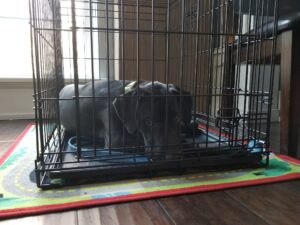
People are not being told the truth about crates…and it’s time for me to speak up. Crates limit your dog’s freedom. They limit the choices your dog can make. They are not free to go outside anytime they want. They are not free to wander the house and stretch their legs.
Isn’t that terrible?
Not so fast…
This is true. Crates limit your dog’s freedom and the choices they make. Um…isn’t that a GOOD thing? If I have a living being, of another species, who has the intellectual fortitude of a 2 year old child I ABSOLUTELY want to limit their freedom and choices they can make.
The nature of a dog is that if something smells good…they will eat it. If it moves…they chase it. If it’s cold out and they don’t want to go outside…they’ll pee and poo inside. If they want to do something that makes them feel good (like ripping the stuffing out of pillows)…they will do it!
I would not let my toddler run around all day unattended, and I CERTAINLY won’t let my dogs run around my home unattended. Especially if they are KNOWN trouble makers. If I can’t have my eyes on my dog when they are free, then they will be placed in their crate. For their safety, and for the safety of my house.
I run across this statement all the time “When I put my dog in the crate they don’t like it. They whine, bark and howl. I don’t want him to do something he doesn’t want to do.”
I feel your pain. I really do. My dog used to chew holes through his crates, and bend the metal door enough that he could escape. BOTH of my dogs escaped their crates and wouldn’t stay put in them…especially when I was gone. They would whine and try and push the door open.
But guess what? I’m smarter than my dog. JUST like I’m smarter than my 3 year old nephew. I don’t care if he doesn’t like to get in his car seat, he needs to do it for his safety.
I don’t care if my dogs don’t like their crate…they need to do it for THEIR safety, too. When I leave the house I need to know my dogs are curled up in a ball, fast asleep, warm and calm in their crate. It’s not cruel…dogs are den animals. Meaning, their natural instinct is to curl up in a small ball in a relatively small area when they sleep.
I don’t need multiple apps on my phone to check in on them during work, or rush family visits because I need to get home and make sure the dog is okay. I KNOW the dog is okay…because he’s safe in his crate.
I don’t have to re-buy all my children’s toys because they were chewed up while I was away…because the dog is safe in his crate. I don’t need to spend $1200+ on a surgery because my dog ingested something he shouldn’t have…because he’s safe in a crate.
So the REAL truth about crates? They keep your dog safe and they give you peace of mind. So…quoting ALL of my clients AND myself: “I love the crate! Why didn’t we do this before!?”
If you need tips or advice on teaching your dog how to be calm in the crate please feel free to email me at: bethebossdogtraining@gmail.com.