
Resource guarding in dogs is a behavior that can turn even the most affectionate pet into a possessive tyrant. As we delve deeper into this topic, it becomes clear that it’s a critical issue every dog owner must address head-on. Ignoring it can lead to severe consequences, including bites, fights, and a breakdown in the trust between you and your dog.
In this post, we will dive deep into why dogs resource guard, the early signs to look for, how to prevent it, and most importantly, how to fix it once it has begun.
Scroll down for a FREE PDF Guide to Stop Resource Guarding!
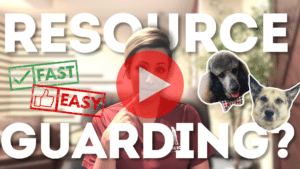
Resource guarding in dogs is a natural behavior rooted in their survival instincts. To understand this better, we must look at how, in the wild, securing resources like food, toys, and resting spots is essential for survival. However, when transitioning to a domestic setting, this behavior becomes problematic.
Dogs may guard food bowls, toys, beds, or even their favorite human. The underlying cause is often anxiety, fear of loss, or past traumatic experiences. Understanding why your dog feels the need to protect their resources is the first step in addressing this issue.
Early Signs to Look For
Recognizing the early signs of resource guarding in dogs can prevent the behavior from escalating into a more severe problem. Therefore, it’s crucial not to dismiss these signs as harmless quirks. These behaviors are clear indicators that your dog is developing or already exhibiting resource guarding behavior.
Look out for the following warning signs:
- Growling or snapping when approached while eating or playing with a toy
- Stiffening of the body when someone comes near their valued item
- Intense staring or watching over the resource
- Blocking access to the guarded item
How to Prevent Resource Guarding
Preventing resource guarding in dogs is much easier than dealing with a full-blown case. Consequently, early intervention is key, as it allows you to shape your dog’s behavior before it becomes a deeply ingrained habit. Here’s how you can nip it in the bud:
- Training and Socialization: From an early age, expose your dog to different environments, people, and other dogs. This helps them become more confident and less likely to guard resources
- Controlled Access: Don’t let your dog always have free access to high-value items. Instead, provide them during training sessions to reinforce positive behavior.
- Teach Commands: Commands like “leave it” or “drop it” can be lifesavers. Make sure your dog understands and obeys these commands reliably.
- Positive Reinforcement: Reward your dog for giving up items willingly. This builds a positive association with sharing and reduces the urge to guard.
How to Fix Resource Guarding Once It Has Begun
If your dog has already started resource guarding, it’s crucial to address it immediately with a strategic approach:
- Professional Help: Sometimes, resource guarding in dogs requires professional intervention. A certified dog trainer (NOT a behaviorist) can provide tailored strategies and techniques to manage and resolve the behavior.
- Safety Measures: Until the behavior is under control, take precautions to ensure everyone’s safety. Avoid situations where the dog feels the need to guard, and use barriers if necessary.
- Correcting Your Dog: Providing an intolerable consequence for your dog’s resource guarding behavior is the best way to stop it. If you are unsure how to do this please CONTACT US HERE. We solve this behavior all the time.
- Desensitization and Counter-Conditioning: Gradually expose your dog to situations that trigger resource guarding while correcting even the smallest signs of ‘bad thoughts’ is the best way
- Fairness: We always make sure the situations we are setting up to stop resource guarding are fair and safe to the dog.
Click here to get a Free PDF on how to stop resource guarding!


Conclusion
Resource guarding in dogs is a critical issue that demands immediate attention. Therefore, ignoring it is not an option if you value the safety and well-being of everyone in your household. By understanding the underlying causes and recognizing the signs early, you can effectively tackle this problem head-on.
Implementing effective strategies is so important to make sure your dog’s behavior fits our peaceful home environment. To begin with, let’s not let this behavior get out of hand—take decisive action today, it’s on us to prevent our dogs from becoming a threat. Moreover, we need to stop making excuses and start making changes, so let’s reclaim control and ensure a harmonious coexistence with our dogs.